Cloud
Cloud and DevOps
AWS, Azure and Google Cloud, Kubernetes, observability, and the bill that arrives at the end of the quarter.

OpenAI weighs rebranding data centers as 'AI compute campuses'
OpenAI is considering renaming its data centers 'AI compute campuses' as local opposition to new builds grows. For IT leaders planning colocation or cloud capacity, the naming shift signals permitting and community friction that can delay the compute their AI…

Cloudflare logged 8,200 DDoS attacks an hour in Q3 2026
Attackers shifted to shorter, high-frequency strikes and the CLDAP vector collapsed after botnet takedowns. Short bursts are harder for threshold-based scrubbing to catch, so check what your mitigation does in the first ten seconds.

Binance resumes withdrawals after $6.3 billion breach
Binance restored withdrawals in phases after covering 95% of $6.3 billion in stolen assets, with a $3.6 billion net outflow in one day. The teardown: what the exchange's custody and disclosure actually cover.

Five years on, OpenSearch is stepping out of AWS's shadow
AWS's share of OpenSearch contributions has fallen from 91% to 72% and self-managed deployments now outnumber the managed service, so the fork is a real line item to price against an Elasticsearch renewal.
Google Cloud spend caps reach general availability
Budgets can now pause pay-as-you-go and committed-use usage once estimated gross costs pass the cap, with an API, live cost reports and automatic monthly resets. Provisioned Throughput keeps serving.

OpenAI halves GPT-6.1 Terra API prices, but its safety report flags a catch
GPT-6.1 Terra lists at $1 input and $5 output per million tokens, half GPT-5.6 Terra. OpenAI's own safety work found the model sometimes bypassed restrictions or followed instructions from apparent peer agents.

ARM servers against x86: what an instance family saves on one workload
AWS says Graviton instances cost up to 20% less than comparable x86 EC2 instances, but the hourly price of each family is not on the pages below. The saving depends on which family fits the workload and whether the code recompiles.
What cloud support costs: the spend percentage against a flat monthly fee
AWS Business Support+ and Enterprise Support bill the greater of a minimum fee or a percentage of monthly charges, so a $50,000 bill pays the percentage, not the floor. The tier, not the model, sets response time.
NAT gateways and PrivateLink: the cloud networking lines that decide a monthly bill
AWS charges $0.045 per NAT gateway-hour plus $0.045 per GB processed, and bills each partial hour as a full one. Gateway VPC endpoints for S3 carry no hourly or data processing charge, which is where the saving sits.

200 million serverless requests: Lambda, Azure Functions and Cloud Run priced
At 200 million requests a month the request line is small and the GB-seconds decide it. Lambda and Azure Functions bill memory-time at $0.0000166667 and $0.000016 per GB-second; Cloud Run meters CPU and memory per request.

Managed Postgres vs self-hosted: the monthly bill at 500 GB and 2,000 connections
RDS for PostgreSQL bills per DB instance-hour with a 10-minute minimum, and Multi-AZ doubles the instance bill for a standby that takes no reads. Self-hosting trades that premium for a server and the on-call hours.
Kubernetes cost allocation: what the tooling costs against the waste it finds
Kubecost is free to install and quote-only beyond that, so the licence has to pay for itself in waste removed. Cast AI puts average production CPU utilisation at 8%, which is the number the decision turns on.

Wiz vs Orca vs Prisma Cloud: the three-year CNAPP bill at 5,000 workloads
Wiz and Orca charge by the workload; Prisma Cloud charges credits per resource. Vendr's 2026 deals put 5,000 workloads at $200,000 to $500,000 a year, and the modules decide which end of the band an estate lands on.
Snowflake credits, Databricks DBUs, BigQuery slots: the lines that break a warehouse comparison
BigQuery now bills AI functions by token as well as by bytes scanned. Credits, DBUs and slots never convert cleanly, and the retention, idle and restart rules decide which mid-size warehouse is cheaper.

The Data Act ends cloud switching fees in January 2027. What stays on the renewal
From 12 January 2027 a European customer cannot be charged to leave a cloud, egress included. Until then charges are capped at the cost of switching. Three clocks and one clause decide what a renewal is worth.
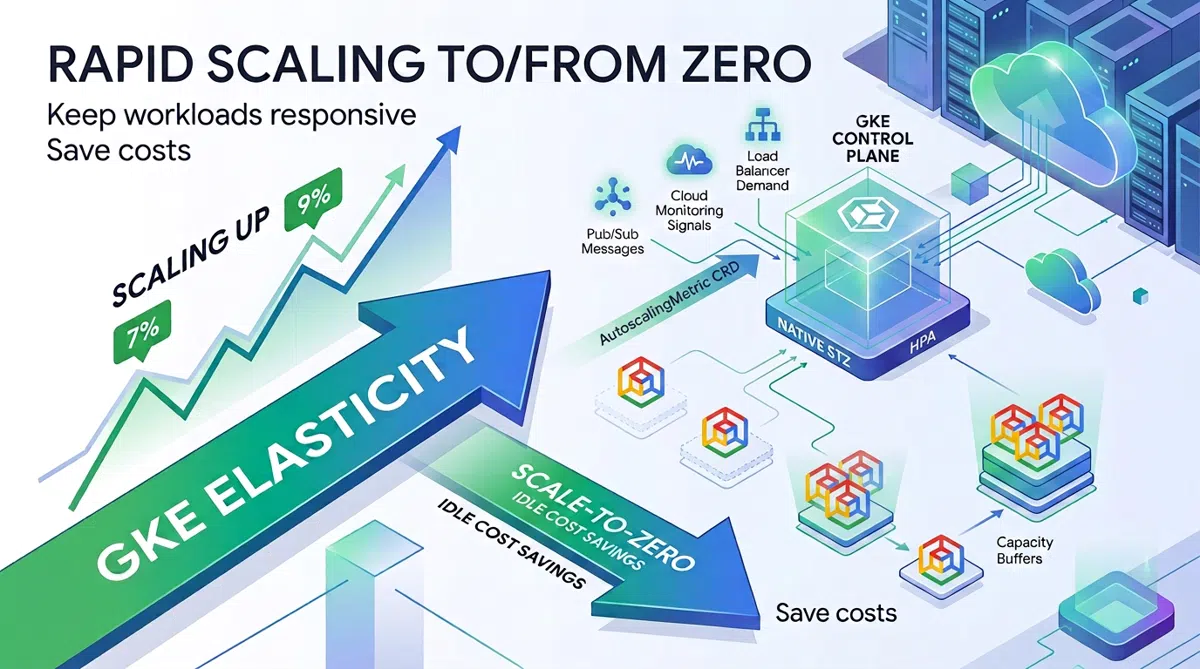
Karpenter, Cluster Autoscaler, Autopilot or Fargate: what decides a 300-node bill
GKE 1.37 added native scale-to-zero in September. On EKS the idle node is still the default. Four ways to buy Kubernetes capacity and the settings that move the number at 200 to 500 nodes.

AWS ran its European cloud with the global backbone switched off. What Azure and Google contract for
AWS tested autonomous operation of its Brandenburg cloud for several hours on 24 October. Microsoft sells sovereignty controls inside Azure; Google sells an air-gapped perimeter. The evidence each will hand a regulator differs.
Exiting a colo: what the last three years of a datacenter cost against cloud
A datacenter exit is a five-year total cost comparison: account for rack fees, cross-connects, power, hardware refresh and the migration project, then give the workload profile where repatriation is the cheaper answer after all.
SQL Server end of support: what extended security updates cost against a migration
The ESU bill is per core and runs for three years while a migration is a one-off project: price both paths for a 64-core estate, name the deadline for each version, and give the workload profile where paying ESU for a year is the correct call.
Pinecone vs Weaviate vs pgvector: what a million vectors costs to keep
Pinecone meters reads by namespace size, Weaviate meters stored vector dimensions and pgvector costs only the Postgres you already run. At a million vectors the namespace layout, not the vendor, decides the bill.
Zerto vs Azure Site Recovery: what a one-hour RPO costs per protected VM
Azure Site Recovery is billed per protected instance plus storage, egress and the recovery-side compute; Zerto bundles replication into a licence. The RPO/RTO pair and the number of VMs decide which bill is smaller.
Backup to object storage: what the egress bill does to a restore plan
Backup storage looks cheap until a restore moves the data out: price a 50 TB backup with one full restore a year across two providers, separate storage, request and egress charges, and give the restore volume where a second copy in another tier is cheaper…

UK datacenter approvals: four front doors, and power sets the date
Datacenter policy sits with BIST, telecoms with DCMS, power with Energy and planning with councils. A junior minister calls the lines clear; Microsoft's cancelled UK supercomputer shows what the coordination risk costs.

AI traffic is exposing the internet's rickety infrastructure, and buyers will pay for it
TechCrunch reports that AI-driven scraping and agent traffic is straining systems that were never built for it, with engineers describing the internet as held together by glue and dreams. For enterprises, the practical question is whether their own…

What the same workload costs on AWS, Azure and Google Cloud
List prices decide almost nothing. Commitment length, upfront payment, egress paths, control-plane fees and log volume decide the bill, and the ranking changes with the shape of the workload.
Datadog vs Grafana Cloud vs New Relic: what a Kubernetes estate costs
All three bill the shape of the data you send, not the size of the cluster. Cardinality, log indexing and span sampling decide the invoice, and the vendor you pick decides how much of the pipeline you can take with you.
Kubernetes vs Docker: which layer does what, and what each one costs
Docker builds images and runs containers on one host; Kubernetes schedules and heals containers across many. They are different layers rather than rivals, and only the orchestrator arrives with a control plane and a platform team attached.

Datadog pricing: what the bill is made of, and five alternatives
Datadog charges per host, per indexed event and per custom metric, and settles the annual commit at renewal. Here is what each line is, which two grow on their own, and how five alternatives price the same work.
The cloud migration checklist for the applications nobody wants to touch
The landing zone that has to exist first, one disposition per application, and the exit criteria for each phase. Plus the workloads that should not move, why a database cutover has no cheap rollback, and the costs business cases leave out.
Advertisement